Commons is an AI-native listening tool for running consultations with hundreds or thousands of people, by text or voice, in any language – turning what they say into a clear, evidenced report of where people agree, disagree, and what matters most.
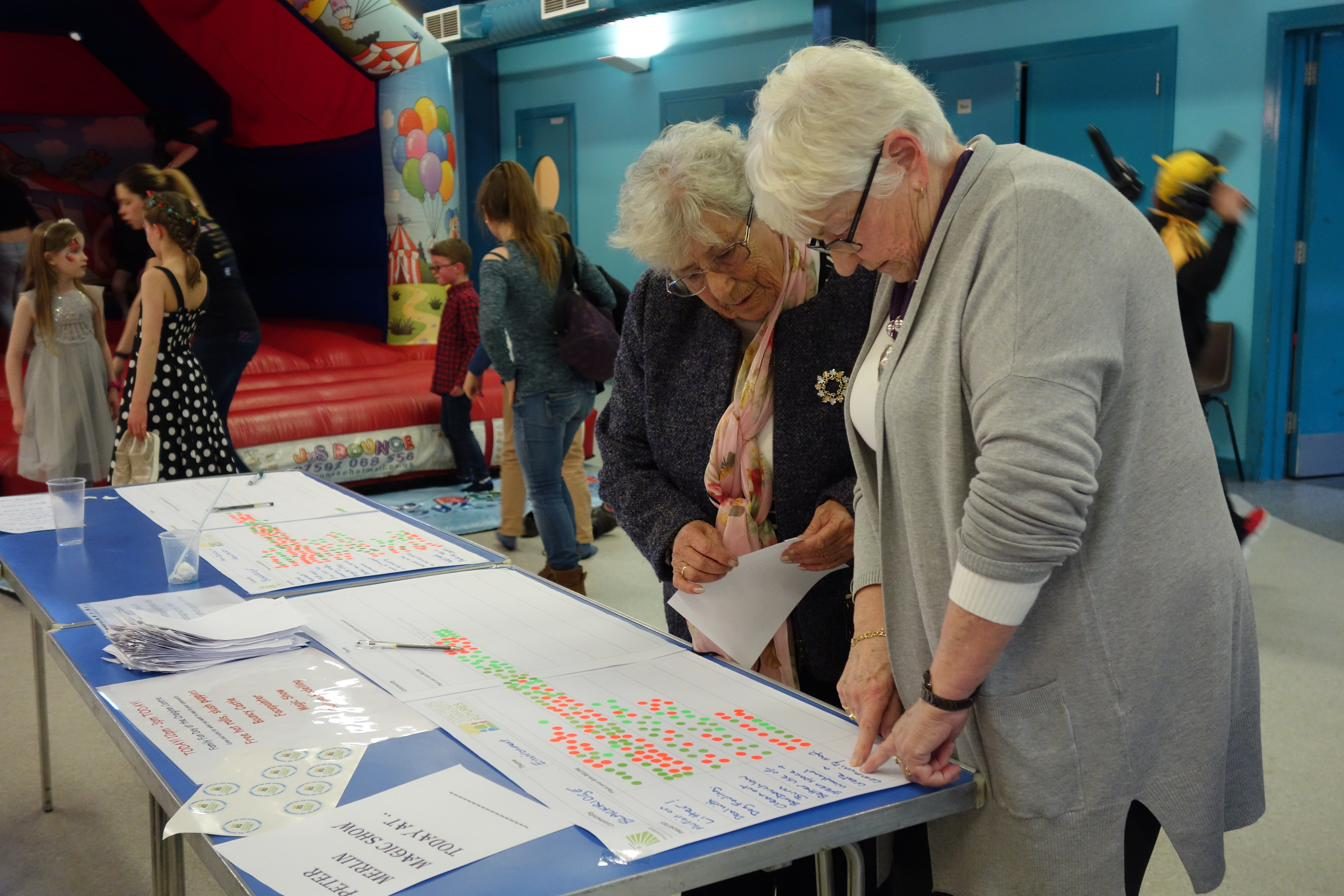
Communities have always voted with dots on a board. Commons makes it rigorous – at any scale.
Available to the third sector for the first timeBuilt on the cutting-edge methods behind Taiwan's national digital deliberations, Princeton's collective-intelligence research, and participatory budgeting across Europe.

Surveys reach everyone but skim the surface. Focus groups go deep but reach the few. Full consultation costs a lot, takes months, or never happens. So decisions get made on thin evidence, and the people they affect most go unheard.
You shouldn't have to choose between reaching everyone and hearing them properly.
Commons runs everything behind one question: collection, transcription, analysis and reporting.
Pose one open question to the people you want to hear from.
They answer in their own words, by text or voice, in any language.
A clear, evidenced report of what people think and where the priorities lie.
Ask the open question, hear the unfiltered answer, and design with evidence instead of assumption.
When budgets are tight, let the community rank what matters most, fairly and visibly.
See exactly where opinion divides, what each side actually thinks, and where the common ground is – measured rather than guessed.
Give boards, funders and commissioners evidence of genuine engagement, with every claim traceable to a real voice.
Behind every data point, a person.
Type your question. Commons helps you sharpen it.
Share a link or QR code. People answer in their own words, by text or voice, in any language, on any phone. No app, no sign-up.
Each person confirms their own points before anything is analysed. Nobody's words get twisted.
Commons organises and measures as responses arrive: themes, agreement, priorities, divides. You watch the picture form live.
When it closes, the report is done.
Invest in street lighting around the parks.AGREE · 78% of 412
Backed across every age group · opens to 96 voices
Behind every finding sit the contributions it came from. We're upfront about uncertainty: agreement always comes with the number of people behind it, and small samples are flagged as small. Taking part is anonymous, and your data stays in the UK.
Every number in a Commons report is produced by an established research method, applied properly and published in full.
Ranked by Wilson score, so 3 out of 3 doesn't outrank 85 out of 100.
Wilson score intervalThe Bradley-Terry model with adaptive pair selection, building on Princeton's collective-intelligence research.
Bradley-Terry modelFound by clustering what people actually said. Weak groupings are flagged as weak; one-offs stay one-offs.
Semantic clusteringReported between groups only when statistically significant, never on a hunch.
Significance-testedMapped using pure mathematics, no AI – showing each camp in its own words and the statements that bridge them.
No AI in the pathAt scale, selected by the Method of Equal Shares, carrying a formal guarantee that every sizeable viewpoint gets a seat.
Method of Equal SharesThe full methodology is linked from every report. Read the methodology →
Join the pilot. We're looking for a small number of charities, funders and support bodies to pilot Commons on a question that matters to them, with us alongside.
Get involved in the pilotSocial Value Lab helps organisations plan, measure and communicate their social impact.
We believe that good listening and good evidence shouldn't be a luxury. The methods behind Commons have long been available only to organisations that could afford specialist researchers. We're putting them within reach of anyone who needs to understand the people they serve.
Commons is part of a family of tools from Social Value Lab.
One question. Every voice. Evidence you can act on.
Or create a free account and try it yourself.